





















































Structured Cabling Systems
Homepage > IT Infrastructure > Structured Cabling Systems Solutions
IT Infrastructure Solutions
Structured Cabling for Reliable and Scalable Infrastructure
Every network, wireless system, security device, server environment, AV platform, and smart building application ultimately depends on the physical infrastructure connecting them. When cabling grows without a clear strategy, organizations often face performance limitations, difficult troubleshooting, poor documentation, and costly rework when requirements change.
A structured approach helps create a standardized foundation that supports current operations while remaining ready for future technologies. Proper planning, installation, testing, and documentation help organizations improve reliability, simplify maintenance, and reduce long-term lifecycle costs across the entire environment.
Integrate Systems
What is Structured Cabling?
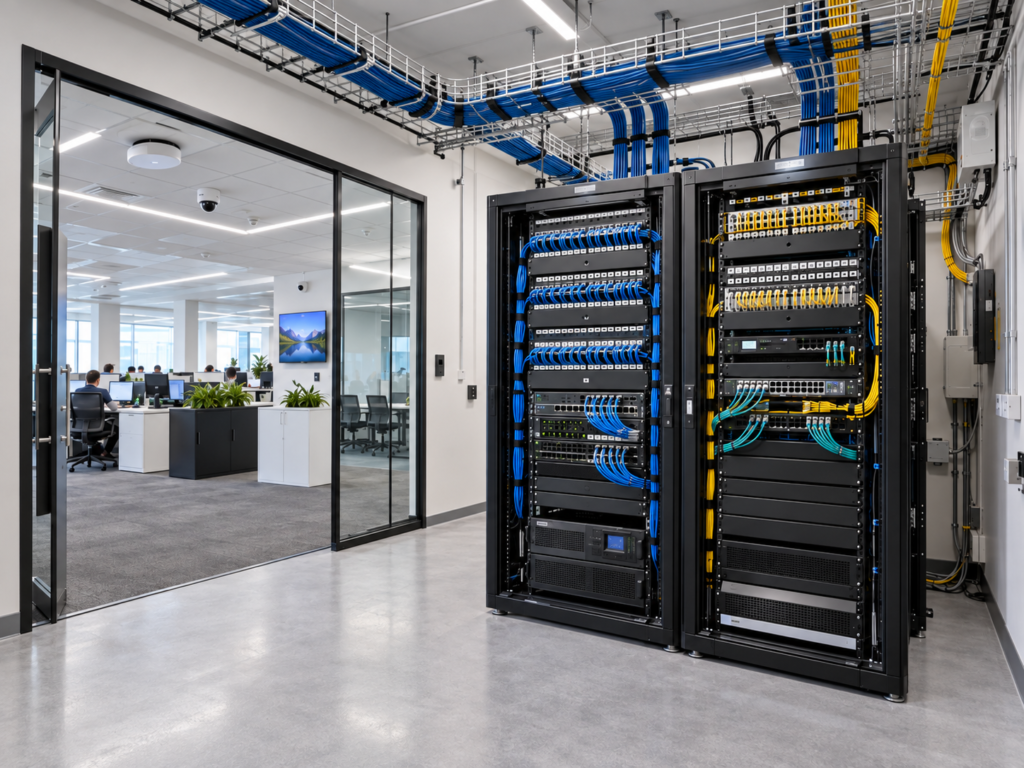
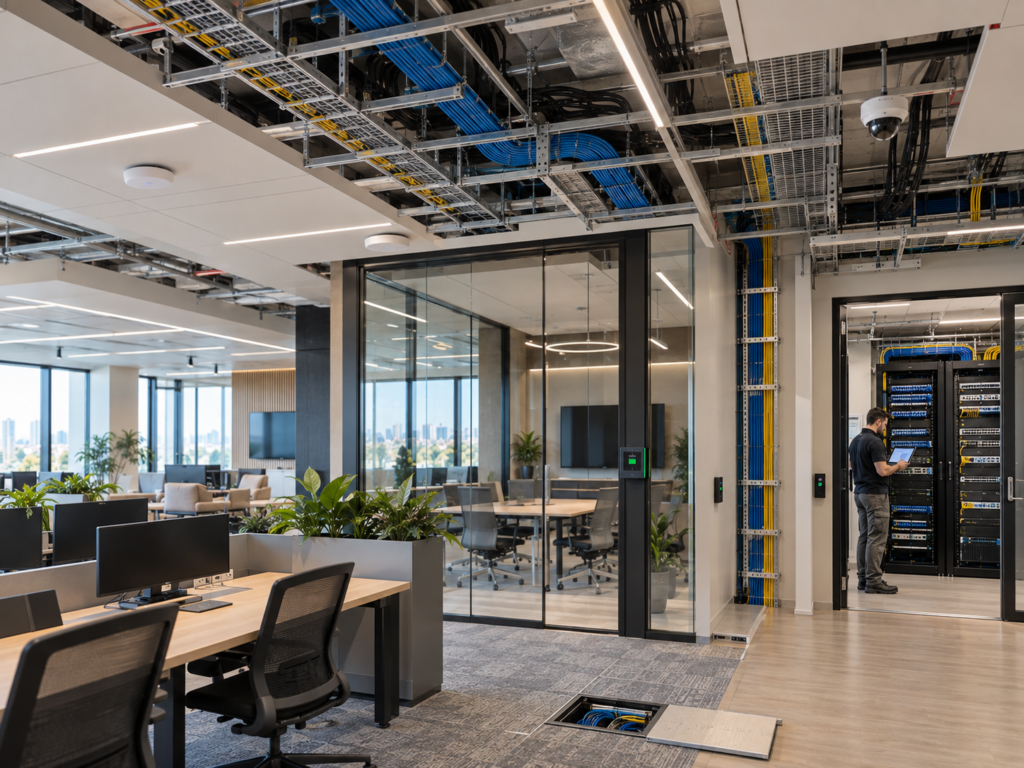
Structured cabling is a standardized approach to designing and organizing a building’s physical network infrastructure. Rather than deploying individual point-to-point connections as needs arise, a structured cabling system creates a planned architecture that supports connectivity across users, devices, applications, security systems, wireless networks, and operational technologies.Â
- Create a scalable foundation for connected technologies
- Simplify maintenance, troubleshooting, and future changes
- Improve infrastructure reliability and documentation
Infrastructure Benefits
Why Organizations Choose Structured Cabling
Reliable Connectivity
Create a stable foundation that supports data, voice, wireless, security, AV, and building technologies through a standardized cabling architecture.
Easier Maintenance & Troubleshooting
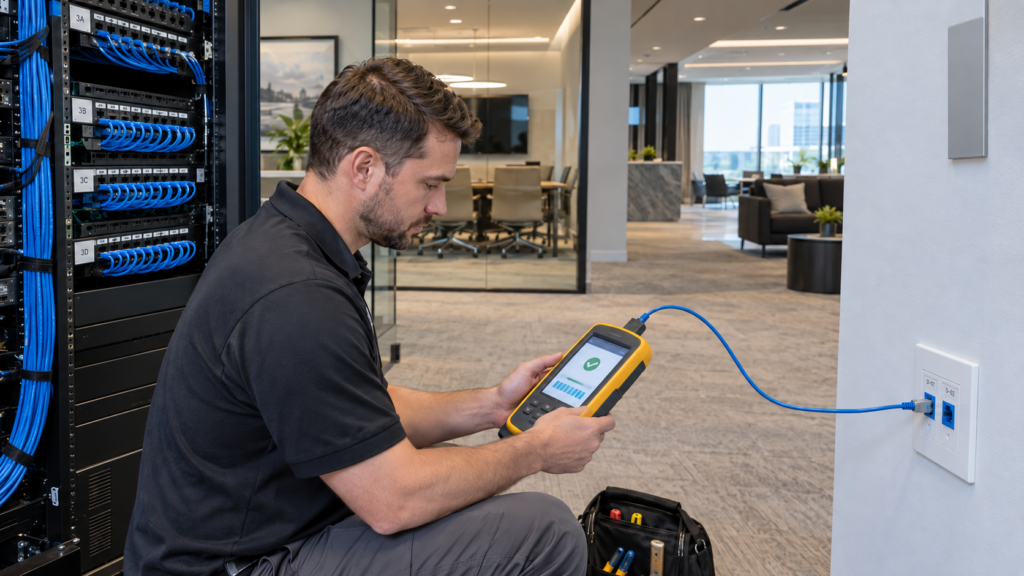
Improve visibility through labeling, testing, certification, and documentation that simplify fault isolation and infrastructure management.
Support for Future Growth
Enable future moves, adds, changes, and new technology deployments without major infrastructure redesign.
Long-Term Infrastructure Value
Reduce rework, improve serviceability, and extend the useful life of the physical network foundation.
Technologies That Power Structured Cabling Systems
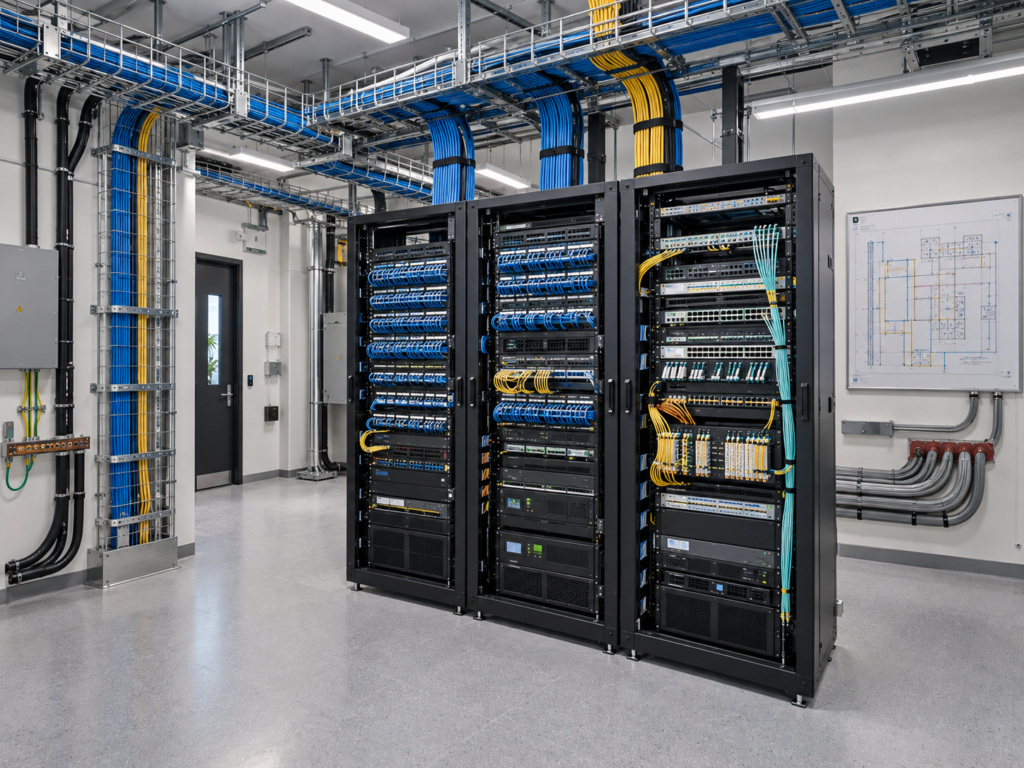
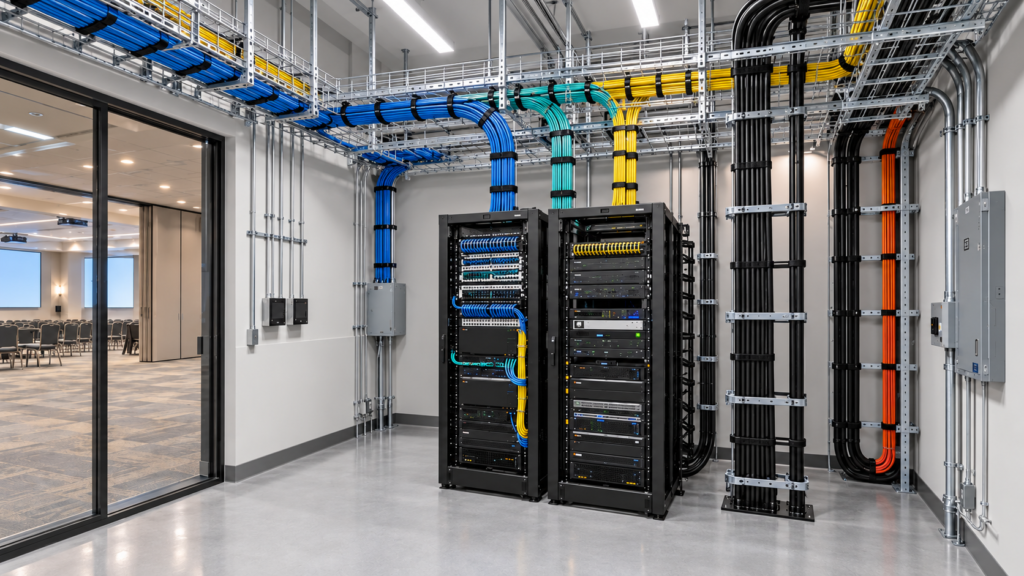
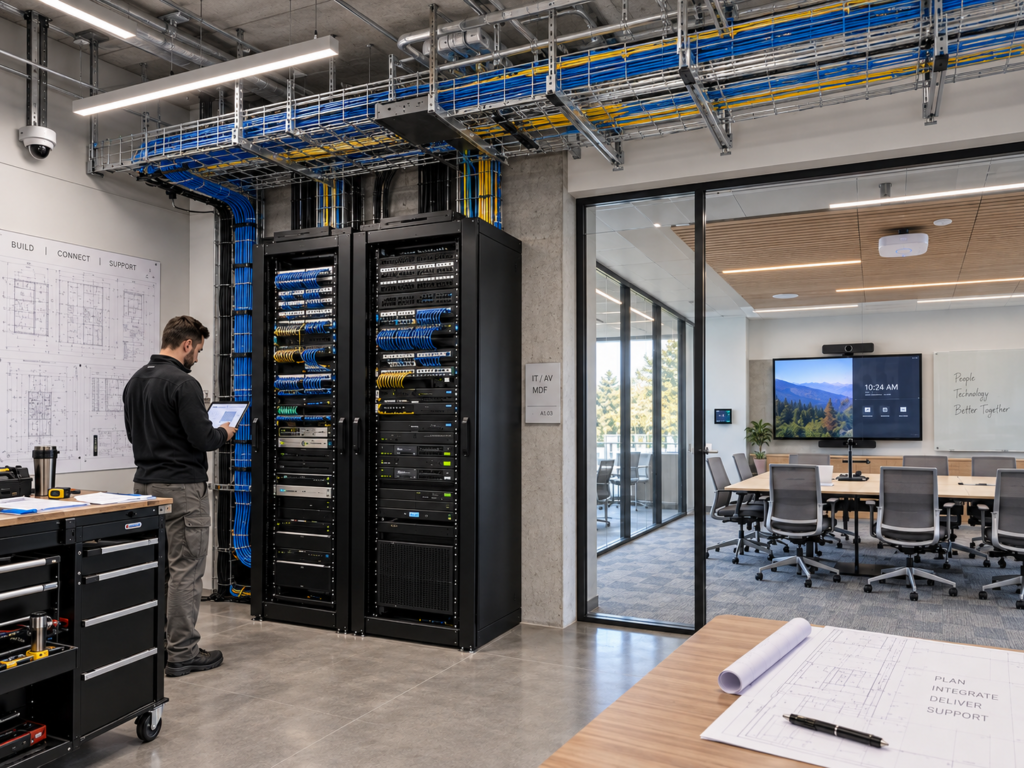
Structured cabling environments combine copper and fiber connectivity, pathway infrastructure, termination hardware, testing processes, and documentation standards to create reliable and scalable communication networks.
Copper cabling supports workstations, wireless access points, security systems, and connected devices throughout the environment.
- Cat6 Cabling
- Cat6A Cabling
- Horizontal Cabling
- PoE Infrastructure
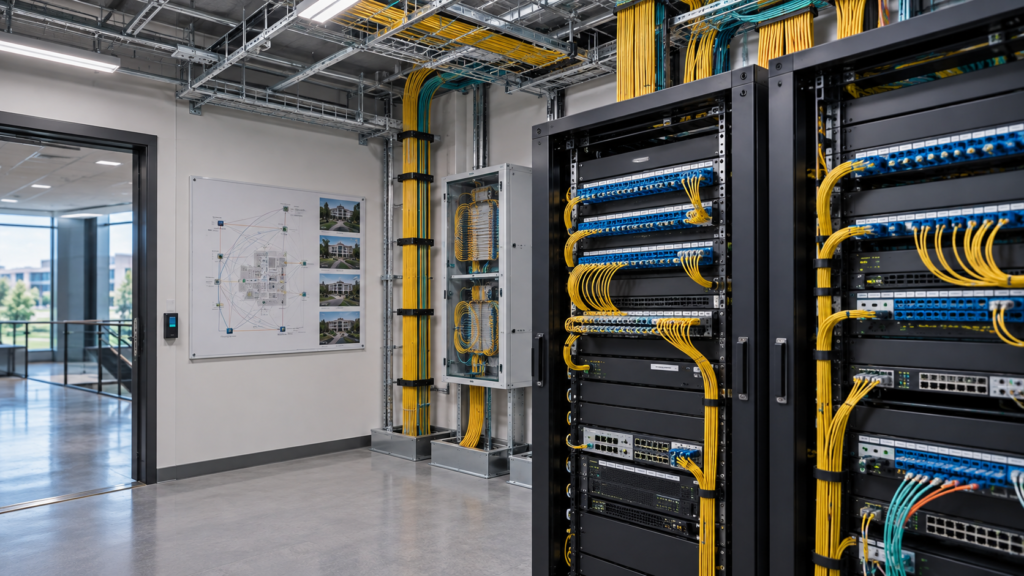
Fiber connectivity supports backbone, inter-floor, and inter-building communications requiring high bandwidth and long-distance transmission.
- Single-Mode Fiber
- Multi-Mode Fiber
- Campus Backbone Cabling
- Riser Infrastructure
Termination hardware provides structured and serviceable connections throughout the infrastructure environment.
- Patch Panels
- Termination Hardware
- Cross-Connect Systems
- Connectivity Modules
Cable management improves organization, serviceability, airflow, and long-term maintainability.
- Vertical Cable Management
- Horizontal Cable Management
- Raceway Systems
- Pathway Infrastructure
Validation technologies help ensure infrastructure performance and compliance with installation standards.
- Certification Testing
- Fiber Testing
- Performance Validation
- Infrastructure Auditing
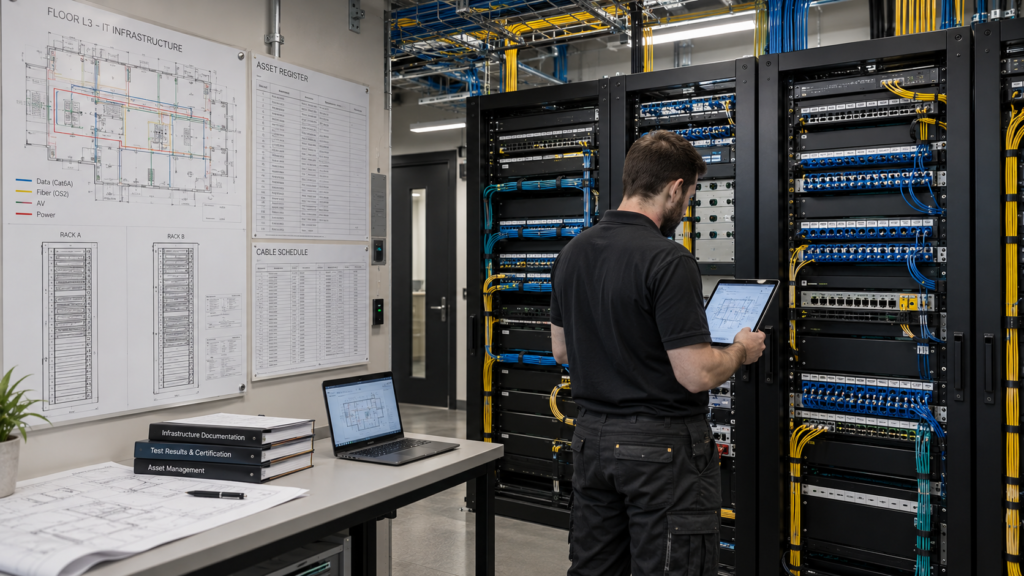
Documentation systems improve maintainability and support future infrastructure changes.
- Cable Labeling
- Infrastructure Documentation
- As-Built Drawings
- Asset Management Records
Technology Partners
Collaborating With Industry-Leading Technology Manufacturers


AV/IT System Integration
End-to-End Solutions Design by ELTEK Integrate
ELTEK Integrate acts as a single point of responsibility for structured cabling projects, ensuring technical consistency and long-term reliability.
Our approach includes:
- site assessment and infrastructure needs analysis
- structured cabling system design across copper and fiber
- pathway, backbone, and telecommunications room planning
- installation, termination, and system validation
- full testing, certification, and as-built documentation
- ongoing support and infrastructure lifecycle planning
Value & Differentiation
Why Structured Cabling Design Matters
Structured cabling should not be treated as a commodity build-out. It has its own design logic: correct category selection, backbone and pathway planning, telecom room placement, and full testing — decisions that are cheap to get right during design and expensive to fix after the walls are closed.
When poorly planned, cabling infrastructure becomes a source of recurring problems — unreliable connections, limited capacity for new devices, undocumented runs that no one can trace, and rework every time the building’s needs change. When properly designed, it becomes infrastructure nobody has to think about for years.
ELTEK Integrate brings together infrastructure design, testing and certification, documentation, and long-term support to deliver cabling systems that are reliable, scalable, and easy to maintain.
Structured Cabling
Typical Use Cases
Structured cabling supports a wide range of everyday infrastructure needs:
Office Fit-Outs & Relocations
New or renovated office spaces need cabling designed around desk layouts, meeting rooms, and wireless coverage from day one.
Data Center & Server Room Builds
High-density environments require certified, high-performance cabling designed for demanding uptime and capacity requirements.
Campus & Multi-Building Connectivity
Schools, universities, and corporate campuses need backbone cabling connecting multiple buildings into one reliable network.
Network Modernization Projects
Aging cabling infrastructure can be replaced or supplemented to support current bandwidth and device density needs.
Smart Building Deployments
Sensors, access control, digital signage, and building automation systems all depend on cabling designed to support IoT-scale device density.
AV & Control Room Integration
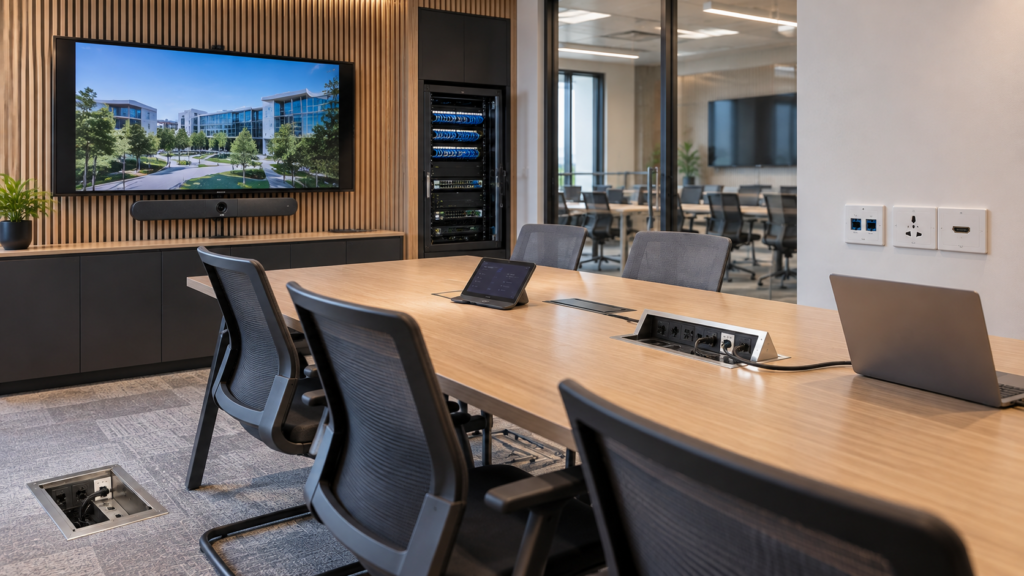
AV-over-IP, video walls, and control systems depend on cabling infrastructure capable of handling their bandwidth and latency requirements.
Wireless Network Expansion
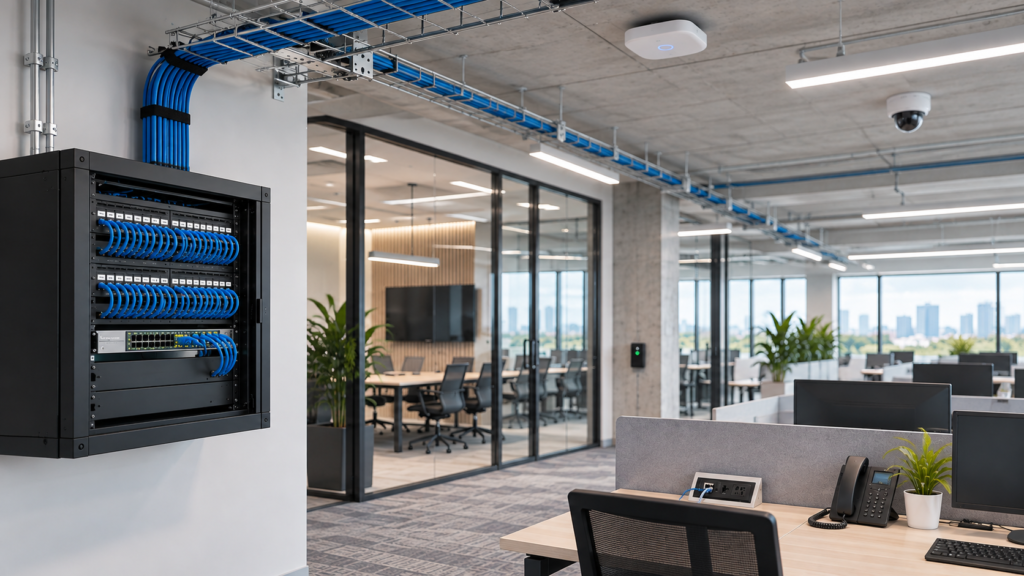
Reliable Wi-Fi coverage depends on cabling that gets power and data to access points wherever they need to be placed.
Facility Documentation & Audits
Existing buildings with undocumented or poorly labeled cabling can be surveyed, tested, and brought up to current standards.
Frequently Asked Questions
Structured Cabling FAQs
What is structured cabling?
Structured cabling is a standardized approach to designing and organizing physical network infrastructure that supports connectivity for data, voice, wireless, security, AV, and building systems.
Why is structured cabling important?
Structured cabling creates a consistent infrastructure foundation that improves reliability, simplifies maintenance, and supports long-term scalability across the organization.
What is the difference between Cat6 and Cat6A?
Both support modern network connectivity, but Cat6A is typically designed to support higher-performance applications and longer-distance 10 Gigabit Ethernet deployments.
When should fiber optic cabling be used?
Fiber is commonly used for backbone connectivity, campus environments, data centers, inter-building connections, and applications that require higher bandwidth or longer distances.
Why is documentation important in structured cabling?
Well-documented infrastructure reduces troubleshooting time, improves serviceability, and makes future upgrades or modifications easier to manage.
Need Additional Information?
If you require additional technical details or project‑specific information, our team is available to provide clarification and guidance.
Our number
+40 21 200 64 55
Our Email
Contact
Let’s Discuss Your Technology Requirements
Insights & Articles
Insights On IT Infrastructure
Is your AV a cybersecurity risk? NIS2 for meeting and control rooms
Every camera, codec and video wall controller on your network is an IT asset. Under NIS2, it is treated like one.
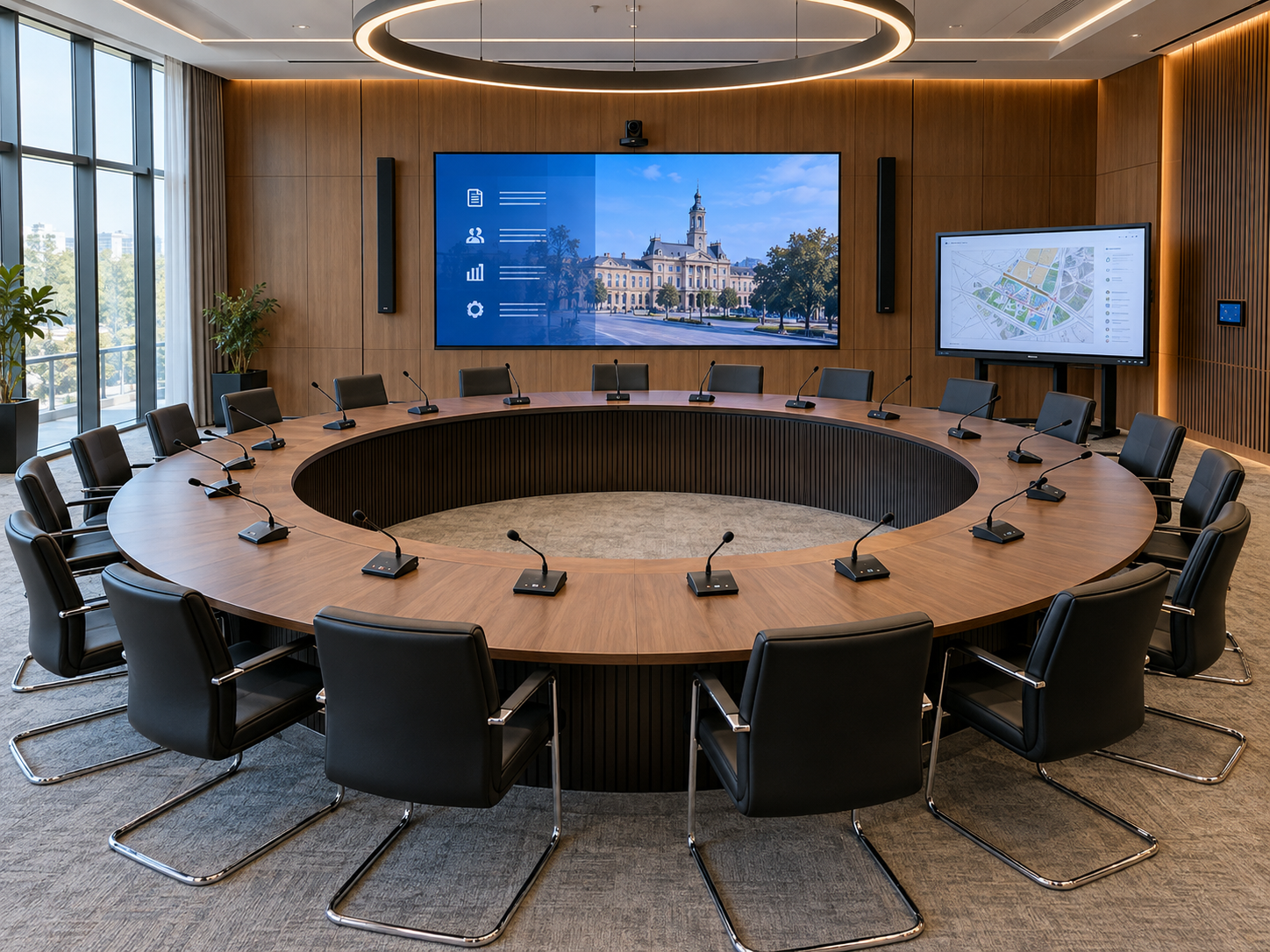
Conference systems for council chambers: a planning guide
Every word on the record, every vote counted, every citizen able to follow.

Why meeting rooms fail users: a 10-point technology checklist
Most room failures start at the design stage.
Be the First to Know — Subscribe Today!
Stay up to date with the latest insights, industry trends, company news, upcoming events, and valuable resources delivered directly to your inbox.
 LinkedIn | Youtube | Facebook | InstagramÂ